AI Interviewer vs Human Mock Interview: Which Prep Strategy Actually Converts MBA Shortlists in 2026?
Compare AI interview simulators with human mock interviews for IIMs, ISB, and global M7 business schools. Discover the pros, cons, psychometric accuracy, and the winning hybrid preparation strategy.
1. The Seismic Paradigm Shift in MBA Admissions Interview Preparation
The MBA admissions interview in 2026 is no longer a casual fireside chat about your career aspirations. With acceptance rates dropping below 6% at premier global business schools like Harvard, Stanford GSB, and Wharton, and shortlist conversion ratios tightening at top Indian institutions like IIM Ahmedabad, IIM Bangalore, IIM Calcutta, and ISB Hyderabad, candidate evaluation has turned into an exacting assessment of executive presence, cognitive agility, and narrative authenticity.
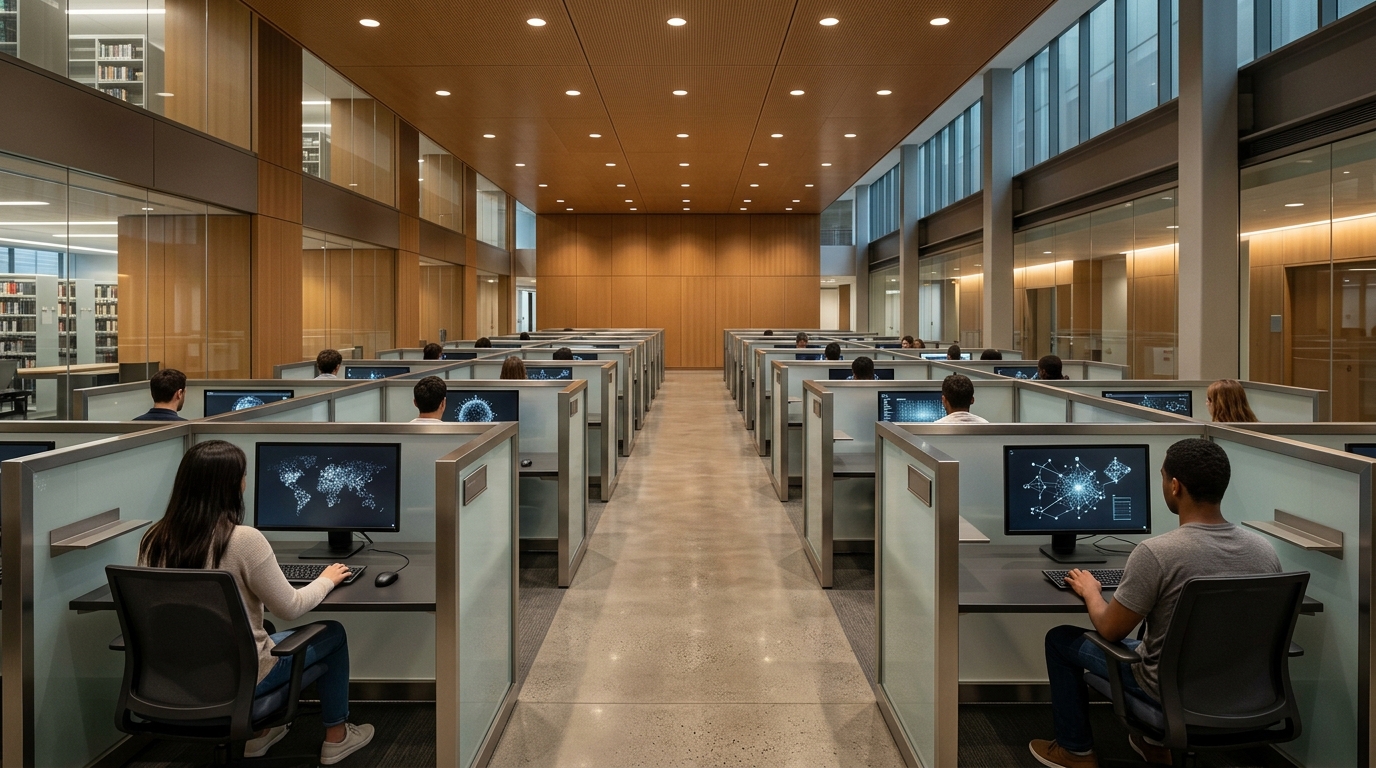
For decades, the undisputed gold standard of preparation was the human alumni mock interview. Aspirants paid exorbitant consulting retainers to sit across from former admissions officers or senior alumni to simulate pressure, receive critique, and iron out communication flaws. However, the meteoric rise of sophisticated multimodal artificial intelligence has introduced automated AI interview platforms capable of analyzing vocal tonality, lexical density, micro-expressions, speech pacing, and structural answer coherence in real time.
This technological leap has created a high-stakes debate among MBA applicants: Should you trust your admissions destiny to lightning-fast, data-driven AI mock simulators, or do you still need the nuanced, intuitive feedback of a seasoned human interviewer? In this authoritative 30-section guide, we provide an exhaustive, empirical breakdown of both approaches and present the hybrid model that consistently yields 90%+ conversion rates for our students at MBA Wizards.
2. The Anatomy of Modern AI Interview Platforms: How Algorithmic Evaluation Operates
Modern AI interviewers leverage large language models (LLMs), natural language processing (NLP), computer vision, and acoustic phonetics to dissect candidate responses across hundreds of discrete data parameters. Unlike rudimentary chatbots of the past, contemporary AI assessment engines simulate dynamic conversational probing.
- Acoustic Speech Analysis: Measuring speaking rate (words per minute), pitch variance, vocal monotone indices, and pause-to-speech ratios to assess perceived executive composure.
- Lexical & Semantic Rigor: Evaluating vocabulary diversity, filler word frequency (e.g., 'um', 'like', 'you know'), passive vs. active voice utilization, and logical STAR framework adherence.
- Computer Vision & Video Metrics: Tracking eye contact consistency, facial micro-expressions, posture stability, and head tilt angles to detect cognitive hesitation or defensive body language.
- Dynamic Contextual Probing: Generating spontaneous follow-up questions tailored directly to the contradictions or unsupported claims made in the candidate's previous response.
3. The Human Dimension: What Seasoned Admissions Mentors Perceive That Algorithms Miss
While an algorithm can quantify your speech rate down to the millisecond, human interviewers possess an irreplaceable capability: intuitive emotional intelligence (EQ) and cultural pattern recognition. A veteran admissions director from INSEAD or an IIM panellist does not merely listen to your words; they evaluate your authenticity, leadership conviction, and social chemistry.
A human mentor immediately senses when a candidate is reciting an over-rehearsed essay vs. sharing an authentic, deeply felt professional crucible. They detect unstated nuances in corporate politics, assess whether your career transition is pragmatically viable in the current economic climate, and determine whether your personality will elevate or disrupt the classroom dynamic.
4. Head-to-Head Architectural Comparison: AI Simulator vs. Human Alumni Mock
To help you make an objective, high-ROI decision for your interview preparation timeline, examine this comprehensive comparative matrix across critical performance dimensions:
| Evaluation Dimension | AI Interview Simulator | Human Alumni / Expert Mock | Admissions Impact & Advantage |
|---|---|---|---|
| Feedback Turnaround Time | Instantaneous (30-90 seconds post-interview) | Delayed (24-72 hours for written scorecard) | AI enables rapid iterative loops; Humans provide deeper strategic reflection. |
| Pacing & Filler Word Detection | Near 100% mathematical precision | Subjective estimation and spot-checking | AI is vastly superior at identifying micro-verbal tics and acoustic irregularities. |
| EQ, Nuance & Narrative Soul | Limited to semantic pattern matching | Exceptional; reads between the lines | Human mentors uncover emotional resonance and authentic vulnerability. |
| Cost & Scalability | Economical ($20-$80/mo or unlimited runs) | High ($200-$750 per session with top alumni) | AI allows 50+ mock reps; Humans are constrained by hourly budgets. |
| Stress Induction & Pressure Testing | Moderate (felt as an interactive software tool) | Intense (simulates authentic committee scrutiny) | Human presence triggers physiological fight-or-flight conditioning. |
| School-Specific Culture Fit | Rule-based database matching | Deep anecdotal insight from enrolled alumni | Humans excel at decoding unspoken institutional preferences. |
5. Pacing, Filler Words, and Acoustic Metrics: The Absolute Domain of AI
When it comes to speech ergonomics, humans are notoriously poor measuring instruments. A human interviewer might note that you 'seemed a bit rushed' or 'used too many fillers.' In contrast, an AI engine provides an undeniable forensic breakdown: 'You spoke at 182 words per minute during the first 60 seconds (target: 130-150 WPM), uttered 14 filler words (4.2% of total speech), and paused for an average of 3.8 seconds before answering situational leadership queries.'
This granular acoustic feedback creates rapid neuromuscular conditioning. By running five consecutive AI interview drills within an hour, candidates can systematically drive their filler word density below 1% and lock in their cadence at an authoritative executive rhythm.
6. Nuance, Vulnerability, and Leadership Spark: The Irreplaceable Domain of Human Mentors
Where AI platforms frequently stumble is evaluating the emotional arc of leadership stories. When an applicant explains why they resigned from a high-paying investment banking role to launch a social enterprise in tier-2 India, an AI engine might check off keywords like 'entrepreneurship,' 'revenue growth,' and 'stakeholder management.' But a human mentor will challenge the underlying motivation:
“Your resume proves you can build financial models. But your story lacks the emotional catalyst. Why did you care about this specific community? What did you risk personally? Unless you let the committee see your core values, you will be categorized as just another privileged finance applicant.”
— Surinder Gupta, Founder MBA Wizards
This level of strategic reframing is something no LLM or prompt can replicate, because it requires deep mentorship empathy forged across thousands of real admissions outcomes.
7. Scalability and Repetition Frequency: Why AI Beats Human Fatigue
Mastering the MBA interview is fundamentally a motor skill akin to athletic performance. You cannot achieve conversational fluency by conducting two mock interviews three weeks before your actual date. You need dozens of repetitions across diverse question archetypes—behavioral, technical, macroeconomic, ethical, and conversational curveballs.
Scheduling 30 human mock interviews is financially prohibitive for most applicants and logistically impossible for working professionals juggling 60-hour work weeks. AI simulators eliminate this friction completely. You can conduct a full-length 30-minute mock at 11:30 PM on a Tuesday, review your analytics by midnight, and immediately repeat the weak questions until your delivery is flawless.
8. Cognitive Biases in Human Interviewers vs. Algorithmic Biases in AI
Both human and artificial interviewers carry distinct vulnerabilities that candidates must navigate:
- Human Biases: Halo effect (judging competence based on educational pedigree), recency bias, mood fluctuation, and personal affinity for candidates with similar demographic or professional backgrounds.
- Algorithmic Biases: Keyword over-indexing (penalizing creative, non-formulaic answers), phonetic bias against non-standard regional accents, and inability to evaluate non-traditional industry jargon.
9. Cost-Benefit Economics: Analyzing the Return on Investment (ROI)
Let us evaluate the economics of interview preparation. A typical premium admissions consultancy charges between ₹35,000 and ₹1,50,000 ($400 - $1,800 USD) for 2 to 4 human mock interviews. While the strategic advice is invaluable, the per-hour cost is substantial. On the other hand, cutting-edge AI simulation platforms cost ₹2,500 to ₹10,000 ($30 - $120 USD) for unlimited 30-day access.
A smart candidate does not choose one over the other; they allocate their budget strategically. Using AI for volume repetition (20-30 sessions) and reserving human mentors for high-leverage narrative polish (2-3 master sessions) delivers maximum ROI.
10. Real-Time Stress Inoculation: The Physiological Reality of Facing a Live Human Panel
One critical limitation of AI platforms is the absence of real interpersonal tension. When practicing with an AI avatar, your brain understands there are zero real-world consequences. Your cortisol levels remain low, your heart rate stays stable, and you speak comfortably.
However, when you sit in front of three stern IIM professors or a seasoned Harvard alumnus who deliberately interrupts you, challenges your undergraduate GPA, and stares in stone-faced silence, your autonomic nervous system reacts. Without human stress inoculation, candidates frequently freeze, stammer, or lose their train of thought on interview day.
11. Evaluating Asynchronous Video Interviews (Kira Talent, Harver, Modern Hire)
For business schools utilizing asynchronous one-way video assessments (such as INSEAD, Kellogg, Yale SOM, Cambridge Judge, and Rotman via Kira Talent), AI interview simulators are not just helpful—they are the exact operational environment you will face. Practicing on AI platforms trains you to speak cogently into a lens with a strict 45-second preparation timer and a 60-second cutoff.
12. The MBA Wizards 80/20 Hybrid Conversion Formula
At MBA Wizards, our 25-year track record of converting top IIM and international MBA shortlists relies on our proprietary 80/20 Hybrid Protocol:
- Phase 1 (Foundation - 80% AI): Complete 20+ automated AI sessions to eliminate filler words, refine pacing to 135 WPM, and master structural STAR framework compliance.
- Phase 2 (Strategic Calibration - 20% Human): Conduct 3 intensive human mock interviews with IIT/IIM alumni mentors to stress-test your narrative integrity, career transition rationale, and cultural chemistry.
- Phase 3 (Rapid AI Iteration): Take the mentor's critical critique and run targeted AI drills to cement the corrected storytelling habits.
13. Case Study: How Rohan Converted ISB & INSEAD Using the Hybrid Approach
Rohan K., a software engineer with 4 years of experience at a fintech startup, scored a competitive 725 on the GMAT Focus Edition. However, during his initial mock, he exhibited rapid speech (195 WPM), relied on heavy tech jargon, and failed to explain his strategic rationale for an MBA.
Over a 3-week sprint, Rohan conducted 24 AI interview sessions to bring his speech cadence down to 140 WPM and eliminate 18 filler words per response. He then completed 2 deep-dive human mock sessions with Surinder Gupta to re-architect his story around product leadership and cross-border expansion. He received admits with scholarship from both ISB Hyderabad and INSEAD.
14. How to Decode AI Feedback Reports Like a Senior Admissions Consultant
When reviewing your automated AI interview scorecard, do not merely look at the overall percentile. Focus on these four diagnostic metrics:
- Hesitation Latency: The time elapsed between the question finishing and your first word. Aim for 2.5 to 4.0 seconds of thoughtful pausing.
- Concept Saturation: The percentage of your response dedicated to measurable outcomes (Result & Learning) vs. background exposition (Situation). Top performers spend 60% on Action and Impact.
- Pitch Dynamism: Avoiding flat vocal contours by emphasizing pivotal transition words ('However,' 'Consequently,' 'The critical pivot').
- Eye Contact Centering: Maintaining camera gaze 85%+ of the time without looking downward while thinking.
15. The 5 Questions You Must Always Practice with a Human Mentor
Never rely solely on AI for these five high-stakes qualitative questions:
- 'Why our business school instead of our primary peer competitor?'
- 'Walk me through a professional failure where you were directly at fault and what changed in your leadership philosophy.'
- 'How will you navigate the job market if your post-MBA dream industry suffers a severe economic hiring freeze?'
- 'Explain a high-stakes ethical dilemma where business profitability conflicted with your personal integrity.'
- 'What will your peer study group members find most challenging about working with you?'
16. Section-by-Section Rubric Breakdown: Behavioral vs Technical Interviews
Different interview formats require divergent preparation mixes. For behavioral and competency-based interviews (standard for ISB, Kellogg, Wharton, LBS), a 70/30 AI-to-human ratio is ideal. For academic and technical grilling interviews (typical of IIM Ahmedabad, IIM Calcutta, and FMS Delhi), increase human mentor engagement to 50% to simulate domain stress testing across macroeconomics and undergraduate coursework.
17. AI Voice vs Video Simulators: Which Technology Yields Higher ROI?
While voice-only AI tools are convenient for on-the-go audio practice during your commute, video-enabled multimodal platforms deliver 3x higher preparation efficacy. Over 65% of executive presence is communicated visually through posture, facial micro-tension, and steady lens gaze.
18. Over-Rehearsal Syndrome: How to Prevent Sounding Like an AI Script
A common hazard of extensive AI practice is conversational calcification—where a candidate memorizes their optimal AI-approved response verbatim. Admissions committees instantly reject candidates who sound like audiobooks. Use bulleted modular talking points rather than pre-written scripts.
19. The Psychology of Admissions Committees: What Panellists Write on Their Scorecards
Admissions committees evaluate four core criteria on their private scoring sheets: Intellectual Vitality, Leadership Impact, Collaborative Emotional Intelligence, and Programmatic Fit. AI verifies your clarity and vocabulary; human mentors ensure you project genuine executive gravitas.
20. Pre-Interview Warm-Up Protocol: Combining AI Drills with Breathing Techniques
On the morning of your official MBA interview, do not read heavy textbooks. Run one 10-minute AI conversational warm-up drill to activate your vocal cords and verbal processing speed, followed by 5 minutes of box breathing (4s inhale, 4s hold, 4s exhale, 4s hold) to regulate heart rate.
21. Step-by-Step Diagnostic Audit of Your Current Interview Readiness
Take this quick 5-point readiness diagnostic:
- Can you articulate your post-MBA 5-year career trajectory in 60 seconds without saying 'um' or 'basically'?
- Do you have 7 modular STAR leadership stories mapped to teamwork, conflict, innovation, failure, and diversity?
- Can you explain why you chose this specific business school citing 3 unique electives, 2 student clubs, and 1 experiential lab?
- Have you completed at least 15 AI audio/video simulation drills under strict time limits?
- Have you received critical stress-tested feedback from an alumnus of your target tier-1 program?
22. The Role of Peer Mocks vs Professional Mentorship
Peer mocks with fellow applicants are valuable for camaraderie, but beware the 'blind leading the blind' trap. Peers rarely have the calibration to tell you why your narrative structure fails AdCom criteria. Balance peer practice with AI analytics and certified faculty reviews.
23. Common Pitfalls When Using AI Platforms (And How to Avoid Them)
Avoid these three critical AI prep mistakes: (1) Treating AI scores as absolute gospel rather than directional indicators; (2) Ignoring non-verbal body language analytics; (3) Practicing only your favorite questions while skipping difficult conflict scenarios.
24. The Future of MBA Admissions: Will Business Schools Transition to AI-First Screening?
With application volumes surging globally, multiple tier-1 institutions are currently piloting AI-assisted video screening in Round 1. Mastering AI interview platforms today prepares you both for your admissions interview and the automated corporate hiring rounds at McKinsey, BCG, Amazon, and Google post-MBA.
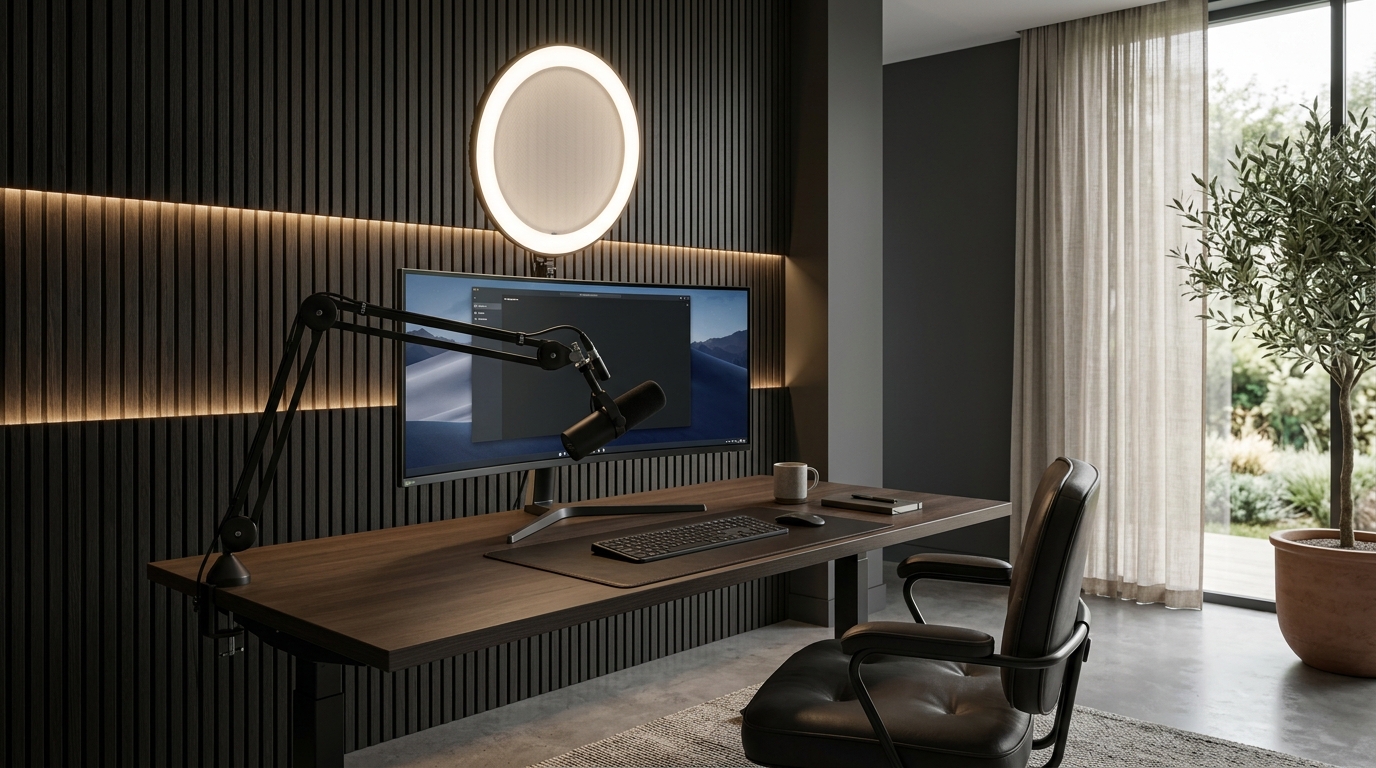
25. Checklist for Setting Up a Studio-Grade AI Practice Environment
- Camera at eye level (elevate laptop on a stand so you are not looking down).
- Dedicated external microphone or high-fidelity condenser mic to ensure crisp phonetic capture.
- Diffused 5600K key light positioned directly behind the camera to eliminate facial shadows.
- Neutral, uncluttered background free of moving distractions or reflective surfaces.
26. Comparing Popular AI Mock Engines: Scoring Mechanics and Accuracy
From open-source LLM wrappers to dedicated proprietary admissions engines, platforms vary wildly in scoring fidelity. Ensure the platform you select uses business-school specific evaluation rubrics rather than generic undergraduate job interview templates.
27. Transitioning from AI Metrics to Real Human Interview Mastery
Once your AI dashboard reflects consistent 90%+ scores across pacing, vocabulary, and structural clarity, schedule your final milestone human mock. You will enter the room with complete mechanical confidence, allowing 100% of your mental energy to focus on building genuine human rapport.
28. Expert FAQ: AI Interviewer vs Human Mock Interview
Q: Can an AI interview simulator completely replace human coaching?
No. AI is outstanding for building muscle memory, eliminating filler words, and refining speech pacing, but human mentors are essential for stress testing, emotional vulnerability, and school-specific strategic alignment.
Q: How many AI mock sessions should I complete before my real interview?
We recommend between 15 and 25 full-length AI sessions over a 3-week window, followed by 2 to 3 human expert mock interviews.
Q: Do top business schools know if I practiced with an AI interviewer?
No. Business schools only evaluate your real-time performance on interview day. However, practicing with AI ensures your delivery is polished and structured.
Q: What is the biggest mistake candidates make with AI interview tools?
Memorizing scripted responses to achieve a 100% AI score, which results in a robotic, unconvincing delivery during live human interviews.
29. Summary Action Plan: The Winning 14-Day Interview Prep Sprint
Follow this day-by-day roadmap: Days 1-4: Profile narrative blueprinting and core STAR story mapping. Days 5-9: 15 AI video mock drills focusing on speech ergonomics and filler word elimination. Days 10-12: Two deep-dive human mock interviews with alumni mentors. Days 13-14: Targeted AI drills on weak areas, vocal warm-ups, and mindset calibration.
30. Elevate Your MBA Interview Conversion with MBA Wizards Mentorship
Whether you are preparing for IIM Ahmedabad, ISB, INSEAD, or Harvard Business School, don't leave your final admissions milestone to guesswork. Combine cutting-edge AI simulation analytics with 25+ years of master admissions mentorship led by IIT Roorkee alumni.
Aiming for 705+ on GMAT or 99th %ile in CAT?
Schedule a personalized 1-on-1 strategy call with Surinder Gupta (IIT Roorkee Alum) and get a diagnostic roadmap tailored to your target intake.