GMAT Online vs Test Centre: Choosing Your Test Experience
Compare GMAT delivery options and review current official rules, equipment requirements and test-day considerations.
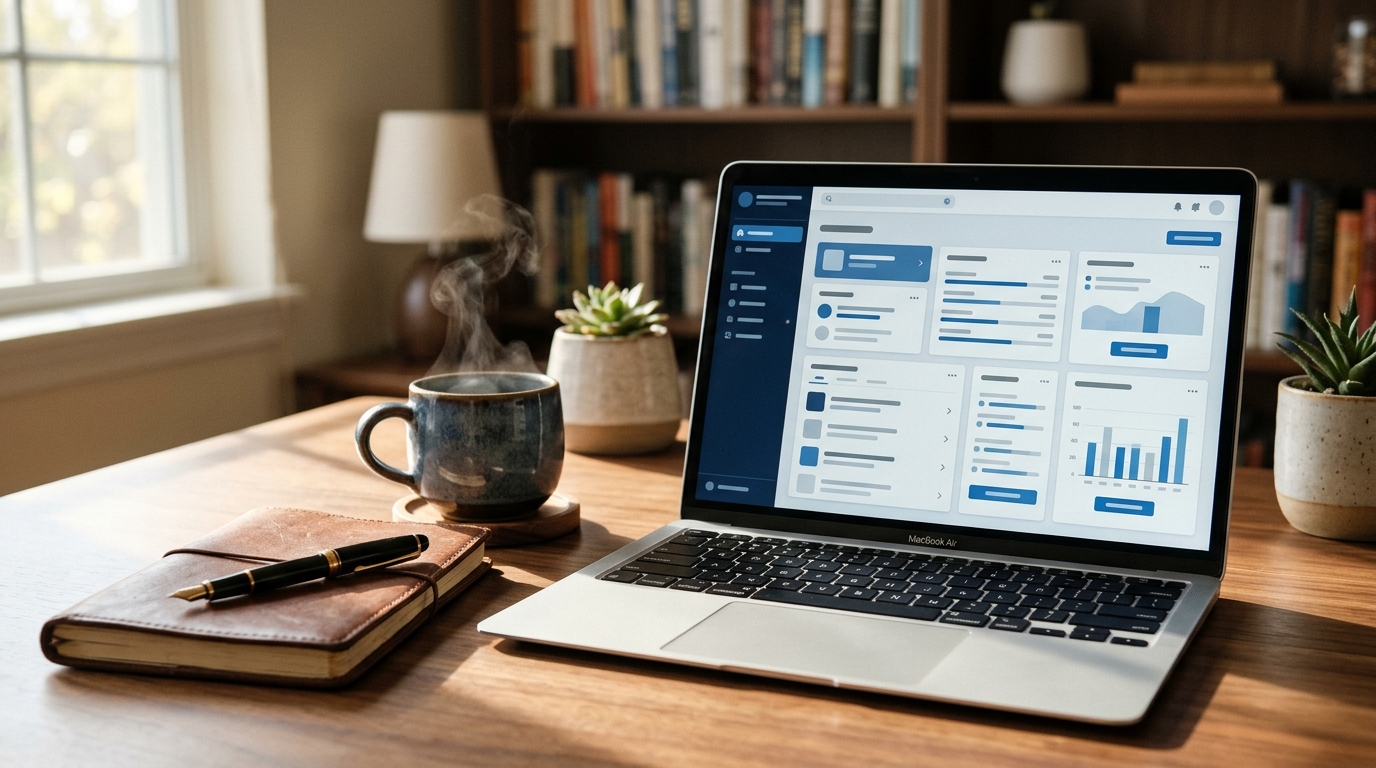
Deciding between the **GMAT online vs test center** exam formats requires evaluating your testing environment, physical scratchpad preferences, technical infrastructure, and psychological performance under differing proctoring conditions. Officially administered by the Graduate Management Admission Council (GMAC), both delivery modes feature the exact same GMAT Focus Edition scoring scale (205–805), section lengths (Quantitative, Verbal, Data Insights), adaptive question algorithms, and 100% universal acceptance across global business schools. The test center format eliminates technical outage risks and provides standardized workstations, while the online format allows you to test from home with physical whiteboards or virtual scratchpads.
Despite identical scoring algorithms and question pools, candidate score distributions often diverge significantly between the two delivery formats due to environmental and operational friction. A test taker who experiences panic during strict remote security room scans might thrive in the quiet, impersonal structure of a physical Pearson VUE testing center. Conversely, an applicant with a quiet home study sanctuary and high-speed fiber internet might score 30 points higher at home without the sensory stress of commuting through traffic. In this exhaustive guide, we deconstruct every operational, psychological, and regulatory nuance of both formats to help you choose the ideal test-taking modality.
1. Compare Delivery Options: Core Architecture and Score Acceptance Parity
When GMAC introduced the online proctored GMAT during global disruptions, business school admissions committees initially observed the format with cautious scrutiny. Today, that skepticism has completely evaporated. Top-tier business schools—including Harvard Business School, Stanford GSB, Wharton, INSEAD, London Business School, and the Indian School of Business (ISB)—treat online and in-person scores with absolute parity.
Your official score report sent to universities does not distinguish between whether you took the exam in a physical test center in Gurgaon, Mumbai, or London, or at your home office desk. Admissions officers view the exact same scaled score report featuring your Quantitative, Verbal, and Data Insights performance percentiles. The core exam architecture remains strictly invariant across both modalities:
- Total Duration and Sections: Three 45-minute sections (Quantitative Reasoning with 21 questions, Verbal Reasoning with 23 questions, and Data Insights with 20 questions) totaling 2 hours and 15 minutes of testing time.
- Section Order Selection: Freedom to choose your preferred section order among the six available permutations prior to starting section one.
- One Optional 10-Minute Break: Available after either the first or second section, allowing time to hydrate, stretch, and reset your mental focus.
- Question Review and Edit: Ability to bookmark as many questions as you wish per section and modify up to three submitted answers within remaining section time.
- Scoring Algorithm: The exact same multi-stage, item-response theory (IRT) computer-adaptive scoring engine operating across the 205–805 score spectrum.
2. Comprehensive Comparison Matrix: Online vs Test Center Modalities
While the exam content is identical, the operational execution varies dramatically. The comparative breakdown below outlines the primary functional differences between both test formats:
| Operational Feature | GMAT Test Center (Pearson VUE) | GMAT Online Proctored Exam |
|---|---|---|
| Testing Location | Dedicated physical Pearson VUE testing center | Private room in your home or private office |
| Hardware & Equipment | Provided desktop workstation, monitor, and mouse | Your personal PC or Mac laptop/desktop (strict specs) |
| Internet Responsibility | 100% managed by test center facility | 100% candidate responsibility; outage terminates exam |
| Scratchwork Medium | Double-sided laminated dry-erase booklet + fine markers | Physical dry-erase whiteboard (up to 12x20 in) + virtual tool |
| Proctoring Model | In-person human proctors + 360-degree CCTV cameras | Remote online human proctor via webcam and microphone |
| Scheduling Flexibility | Fixed business hours; requires booking weeks in advance | Available 24/7 round the clock; book 24 hours prior |
| Attempt Limits | Counts toward 5 annual and 8 lifetime attempt limits | Counts toward exact same 5 annual / 8 lifetime limits |
| Rescheduling & Canceling | Fees vary based on window (24 hrs to 60+ days) | Fees vary based on window (24 hrs to 60+ days) |
| Score Release Timeline | Unofficial score visible immediately on screen; official in 1-3 days | No unofficial score on screen; official score posted in 1-7 days |
3. The Physical Environment Debate: Home Sanctuary vs Test-Center Acoustic Isolation
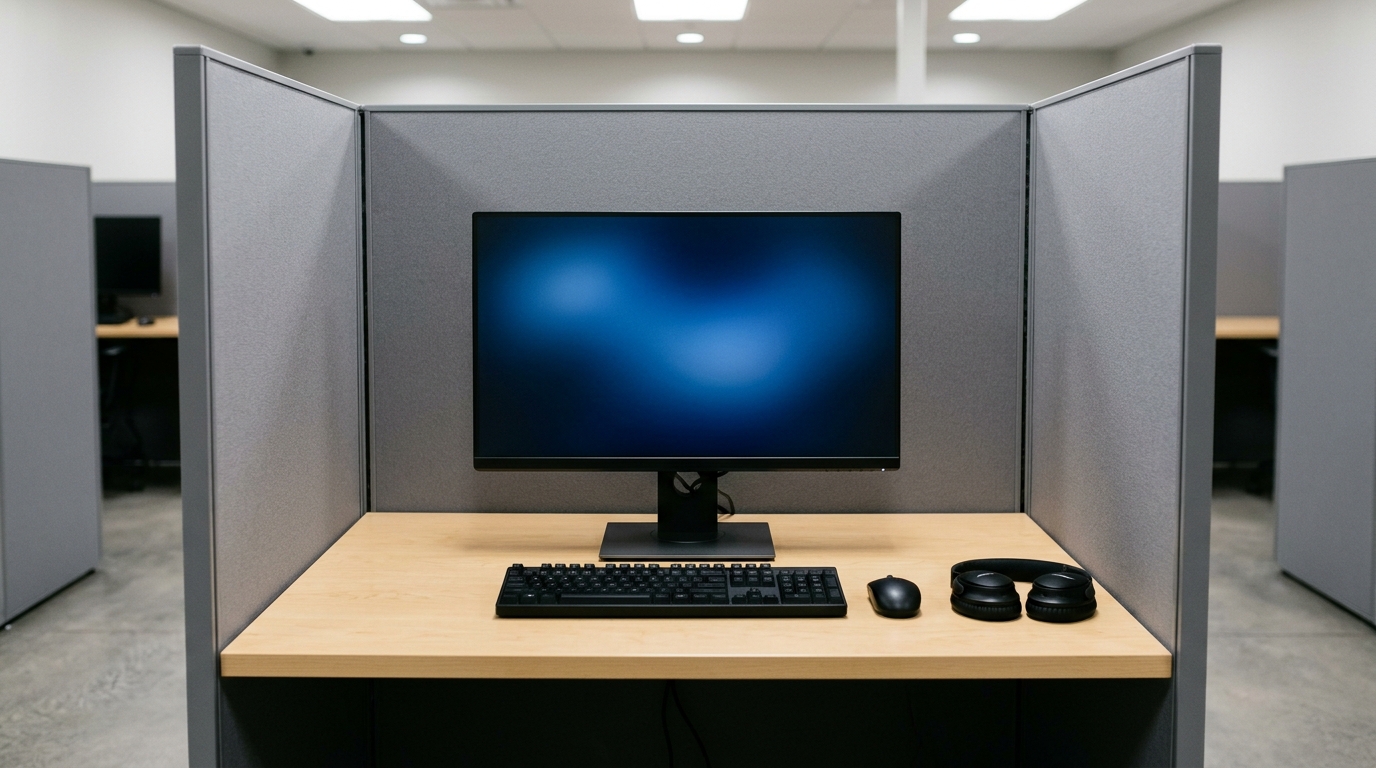
Your immediate physical surroundings directly influence cognitive performance under high-pressure timed testing conditions. In a Pearson VUE testing center, you operate within a strictly controlled, acoustic-dampened environment. Every workstation features privacy cubicle dividers, standardized low-friction optical mice, mechanical keyboards, and adjustable ergonomic seating.
Additionally, test centers provide industrial-grade passive noise-canceling earmuffs or foam earplugs to block out ambient keyboard typing and mouse clicking from adjacent test takers. For candidates living in noisy urban centers, joint family households, or apartment complexes subject to street traffic, dog barking, or unexpected doorbell deliveries, the test center provides an impenetrable acoustic bubble.
Conversely, the online proctored exam enables you to test in a familiar, comfortable setting without the friction of a morning commute. You sleep in your own bed, brew your preferred coffee, and sit in your ergonomic office chair. For test takers who suffer from performance anxiety triggered by institutional exam halls and intrusive metal-detector security checks, testing at home creates a sense of psychological safety and calm.
4. Scratchwork and Tooling: Physical Whiteboard vs Laminated Notepad
Scratchwork management is one of the most significant mechanical differentiators between the two formats, especially during the Quantitative Reasoning and Data Insights sections where multi-step calculations and visual charts predominate:
Test Center Scratchwork: At Pearson VUE centers, proctors issue you a double-sided, laminated spiral notebook containing five grid-lined legal-sized pages, along with two fine-point Staedtler dry-erase markers. You cannot erase this notebook during the exam; when you fill all pages, you raise your hand and a proctor exchanges it for a fresh booklet. Writing on laminated plastic with fine markers feels crisp and tactile, allowing fast algebraic notation.
Online Exam Scratchwork: When testing online, GMAC allows you to use both a physical whiteboard and a built-in virtual on-screen whiteboard tool. The physical whiteboard must meet strict dimensions: maximum 12 inches by 20 inches (30 cm x 50 cm), must be plain white without gridlines or markings, and must be erased completely in front of the webcam at the end of each section and exam. Erasing the whiteboard during the exam requires a few seconds of precious time.
- Marker Hygiene Tip: Dry-erase markers can dry out within 30 seconds if uncapped. Practice capping your marker immediately between calculation steps during timed drills.
- Whiteboard Sizing: Purchase an exact 12x20 inch double-sided magnetic dry-erase board at least four weeks before your exam date to build muscle memory.
- Erasing Workflow: Keep a felt eraser and a microfiber cloth beside your whiteboard; wiping clean in broad strokes takes under 4 seconds during section transitions.
5. Technical and Proctoring Risk Audit: Internet Drops, Room Scans, and Security Protocols
The single greatest downside risk of the GMAT Online is technical vulnerability. When testing at a Pearson VUE center, any power outage, server glitch, or hardware failure is the legal and logistical responsibility of the testing provider. If an issue occurs, the facility rebooks or reschedules your session at no cost, and your attempt counter is preserved.
When testing online, 100% of the technical responsibility rests upon the candidate. A sudden internet disconnection, local power brownout, background operating system update, or unstable Wi-Fi signal can cause the secure browser software (OnVUE) to terminate your exam session. If your session is terminated due to technical instability, you may face weeks of administrative appeals with GMAC customer support to secure a retest voucher.
Furthermore, remote online proctoring is governed by extraordinarily strict AI and human surveillance protocols. You must perform a 360-degree webcam scan of your entire room before testing starts. During the exam:
- Your entire face and eyes must remain visible inside the webcam frame at all times; looking down or away from the monitor for extended periods triggers proctor warnings.
- No mumbling, reading questions out loud, or moving your lips silently is permitted, as audio algorithms flag lip movement as potential communication.
- No third party may enter the room under any circumstances; a pet walking across the room or a family member opening the door results in immediate exam revocation.
- Zero objects may sit on your desk other than your clear glass of water, physical whiteboard, dry-erase markers, and eraser. Dual monitors, external webcams on unapproved stands, and wristwatches are strictly banned.
6. Hardware and Connectivity Readiness Checklist for GMAT Online
If you elect to take the exam online, your technical setup must be validated through the official OnVUE system check at least 48 hours in advance. Use the technical readiness matrix below to audit your workstation:
| Technical Component | Mandatory Requirement | Recommended Best Practice |
|---|---|---|
| Operating System | Windows 10/11 (64-bit) or macOS 10.15+ | Freshly rebooted with all background updates paused |
| Internet Connection | Reliable 3.0 Mbps download / 2.0 Mbps upload | Direct wired Ethernet cable; avoid shared Wi-Fi networks |
| Webcam Resolution | Minimum 720p built-in or external USB webcam | 1080p webcam positioned at eye level for stable framing |
| Audio & Microphone | Internal or external microphone (no headsets allowed) | Quiet room with low acoustic echo; test input levels in OnVUE |
| Desk Surface | 100% cleared of all books, papers, cables, and electronics | Position desk facing away from open windows to prevent glare |
| Power Source | Continuous AC power connected to machine | Connect laptop and router to an Uninterruptible Power Supply (UPS) |
7. Section Pacing & Break Logistics: Differences in Clock Management
Managing your 10-minute optional break differs fundamentally between both formats. In a test center, taking a break requires raising your hand, waiting for a proctor to escort you out, scanning your digital palm print at the security door, walking to the restroom or locker, and completing the palm-scan verification before re-entering your cubicle. This security protocol consumes 3 to 4 minutes of your 10-minute break, leaving you only 6 minutes of actual rest.
Online, you are permitted to leave the webcam frame during your designated 10-minute break after notifying the proctor via the chat interface. You can immediately access your restroom, drink water, and stretch. However, you must return to your desk and complete your room check-in before the 10-minute timer expires; if you return 30 seconds late, the testing platform automatically starts the next section, burning precious exam time.
8. Candidate Case Studies: Performance Swings Between Modalities
To demonstrate how modality selection influences scores, consider two student journeys from MBA Wizards mentorship cohorts:
Case Study 1 - Home Sanctuary Success: Tanvi struggled with test anxiety during her first attempt at a Delhi test center, where noisy air conditioning and loud mouse clicks distracted her during Data Insights, resulting in a 615 (75th percentile). For her second attempt, she switched to GMAT Online. Testing in her quiet study with a wired fiber connection and her preferred whiteboard, she felt calm and focused, improving her score to 685 (96th percentile) and securing an admit to London Business School.
Case Study 2 - Proctor Friction Online: Arjun attempted the GMAT Online from his apartment. Twenty minutes into the Quantitative section, his proctor interrupted via video chat to demand a re-scan of his desk because he had rested his chin on his hand. The sudden interruption shattered his concentration, causing him to rush questions and finish with a 595. Two weeks later, Arjun booked a test center appointment at Pearson VUE Gurgaon. Free from remote proctor surveillance anxiety, he scored 675 (94th percentile) and gained admission to the Indian School of Business (ISB).
9. Decision Matrix: Which Delivery Mode Suits Your Profile?
Evaluate your personal cognitive preferences against this operational decision matrix:
- Choose the GMAT Test Center If: You live in an urban environment with frequent power interruptions or unreliable Wi-Fi; you are easily unnerved by remote proctor interruptions; you prefer writing with fine markers on laminated grid sheets; or you need strict institutional structure to focus.
- Choose the GMAT Online If: You have an ultra-reliable fiber internet connection backed by UPS power; you experience severe exam anxiety in unfamiliar test centers; you need flexible 24/7 exam scheduling (e.g., testing at 6:00 AM on Sunday); or the nearest physical test center requires hours of travel.
- Hybrid Strategy: Many successful candidates book their first attempt at a test center to establish an official baseline score without technical risk, and utilize the online exam for a targeted retake if needed.
10. The 48-Hour Pre-Exam Protocol for GMAT Online Test Takers
Success on the GMAT Online requires systematic operational rehearsal during the 48 hours leading up to your exam appointment. Do not treat your home workstation as a casual desk; transform it into an accredited, distraction-proof testing sanctuary by executing this standardized protocol:
- Perform the Full OnVUE System Diagnostic Check: Download the latest version of the secure browser 48 hours prior, test your microphone and webcam streams, and verify that your operating system satisfies all security requirements.
- Disable Background Applications and Antivirus Scanners: Turn off cloud synchronization tools (Dropbox, Google Drive, OneDrive), terminate corporate VPN daemons, and pause automatic Windows/macOS updates that could trigger background pop-up windows during testing.
- Audit Room Acoustics and Physical Lighting: Position your desk so that bright sunlight or overhead glare does not shine directly into your webcam lens. Inform household members, roommates, and family that the room is strictly quarantined for three hours.
- Pre-Position Sanctioned Tools: Place your dry-erase markers (check that both write cleanly with bold lines), felt eraser, clear glass of water without labels, and government-issued passport or national ID directly on the desk edge.
- Rehearse Whiteboard Erasing Speed: Spend 5 minutes practicing rapid erasing routines so that wiping your 12x20 inch board clean consumes under 3 seconds during timed section transitions.
11. Test-Day Morning Protocol for In-Person Pearson VUE Test Takers
If you are testing at a physical Pearson VUE testing facility, your morning preparation must focus on eliminating transit friction and managing physiological arousal:
- Plan for a 45-Minute Arrival Buffer: Arrive at the testing center at least 30 to 45 minutes before your scheduled appointment time. This ensures ample time to find parking, locate the floor suite, use the restroom, and complete digital check-in without rushing.
- Master the Check-In Security Workflow: Present your valid government-issued passport, complete digital palm-vein biometrics, take your digital portrait photo, and store all personal belongings (phone, wallet, watch, snacks) into your assigned secure locker.
- Calibrate Physical Comfort: Dress in comfortable, layered clothing without large pockets or hoods. Test center climate control can fluctuate between chilly air conditioning and warmer ambient heat.
- Inspect Your Scratchpad and Markers Immediately: Before entering the testing room, verify that both Staedtler dry-erase markers write smoothly on the laminated booklet. If a marker tip is frayed or dry, request an immediate replacement before sitting down.
- Execute Pre-Exam Breathing Drills: Spend two minutes performing 4-7-8 box breathing in the lobby chair to slow your heart rate and shift your autonomic nervous system from panic into calm focus.
12. Expert Advice by Surinder Gupta (IIT Roorkee)
“The GMAT is an intense mental endurance contest where microscopic cognitive distractions can cost you 20 to 30 scaled points. If you choose the test center, visit the center a week prior to map your travel time, parking, and security protocols. If you choose the online format, take at least three full-length computer-adaptive mocks in your exact exam room using your physical whiteboard and the identical webcam setup. Predictability is the ultimate antidote to test anxiety.”
— Mr. Surinder Gupta (IIT Roorkee), Master Admissions Mentor
We recommend testing your pacing and simulation discipline on the MBA Wizards GMAT Mock Platform, which mirrors the official test engine, question review mechanics, and adaptive scoring algorithms of the real exam.
13. Frequently Asked Questions: GMAT Online vs Test Center
Q: Do business schools know if I took the GMAT online or in a test center?
No, official score reports delivered to business schools do not indicate the exam delivery mode. Admissions committees at Harvard, Stanford, INSEAD, ISB, and all other global programs receive identical electronic score records displaying only your scaled section scores, percentiles, and total score.
Q: Can I switch from GMAT Online to Test Center if I need to retake?
Yes, you have complete freedom to mix and match delivery modes across attempts. For instance, you can take your initial exam at a physical test center and complete a subsequent retake online (or vice versa), subject only to the mandatory 16-day waiting period between consecutive appointments.
Q: What happens if my internet connection drops during the GMAT Online?
If your internet connection drops momentarily, the OnVUE software attempts to reconnect automatically. However, if the disconnection lasts more than a couple of minutes or causes the session to crash, the exam is suspended. You must contact Pearson VUE and GMAC customer service to open an incident case and request a retest voucher, which can take several business days to resolve.
Q: Can I use headphones or earplugs during the GMAT Online?
No, wired or wireless headphones, earbuds, and commercial headsets are strictly prohibited during the GMAT Online exam to prevent external audio communication. In contrast, physical Pearson VUE test centers provide complimentary foam earplugs and noise-canceling headphones at your workstation.
Q: Is the GMAT Online easier or harder than the Test Center exam?
The exam questions are pulled from the exact same standardized item banks, and the adaptive scoring algorithms are mathematically identical. Neither format is objectively easier or harder; rather, candidates perform better in the format that aligns with their psychological comfort, scratchwork habits, and noise sensitivity.
Q: How quickly do I get my official score report for both formats?
At a physical test center, you receive an immediate unofficial score on screen upon finishing, and your official verified report is posted to your mba.com portal within 1 to 3 business days. For the online exam, no unofficial score is displayed on screen; your official score report is typically delivered to your account within 1 to 7 business days following human proctor audit.
14. Strategic Conclusion and Action Plan
Choosing between the GMAT Online and the physical Test Center is a strategic decision that should be tailored to your cognitive habits, home environment, and technological stability. Neither modality offers a shortcut to a high score, but selecting the environment where you feel most confident, calm, and in control can be the decisive factor in breaking through your target score barrier.
Accelerate Your Score with MBA Wizards AI Diagnostic Tools
Proprietary adaptive test algorithms, speech cadence analytics, and behavioral simulation trained on 25+ years of IIM and 700+ GMAT mentorship data.
AI CAT Mock Interviewer
Adaptive IIM PI simulation with real-time video evaluation, speech cadence analytics, and faculty question banks.
Launch CAT Interviewer ↗AI GMAT Interviewer
Simulate high-stakes behavioral & leadership interviews for ISB, IIM PGPX, and global M7 business schools with instant scoring.
Try GMAT Interviewer ↗GMAT Adaptive Mock Tests
Authentic item-response theory algorithms, 3-question edit feature, and deep sectional error logs for 705+ targeting.
Take Adaptive Mock ↗1-on-1 Faculty Mentorship
Personalized diagnostic strategy consultation with Surinder Gupta to audit your test baseline and target intake roadmap.
Aiming for 705+ on GMAT or 99th %ile in CAT?
Schedule a personalized 1-on-1 strategy call with Surinder Gupta (IIT Roorkee Alum) and get a diagnostic roadmap tailored to your target intake.