IIM Interview Preparation: How to Crack WAT, GD and PI
Prepare for IIM WAT, GD and PI with proven strategies, common questions, sample frameworks and mistakes to avoid. Start early, stay confident.

Every year in mid-January, following the release of the CAT exam results, thousands of ambitious aspirants experience a dramatic emotional rollercoaster. Scoring in the 99th percentile produces immense euphoria, but it is swiftly replaced by acute apprehension as the reality of Stage-2 admissions sets in. The statistics are sobering: across the older BLACKI IIMs (Ahmedabad, Bangalore, Calcutta, Lucknow, Kozhikode, and Indore), approximately 8 to 10 candidates are shortlisted for every single seat. This means that **75% to 85% of all 99-percentilers are destined for rejection** during the Stage-2 interview crucible.
The Written Ability Test (WAT), Group Discussion (GD), Extempore presentation, and Personal Interview (PI) are not superficial conversational formalities. They are high-stakes, psychologically calibrated behavioral assessments designed by tenured professors and seasoned industry executives to evaluate mental agility, communication clarity, emotional maturity, business acumen, and ethical integrity. A candidate who conquered Advanced Permutations & Combinations on CAT will flounder completely if they cannot structure a coherent 15-minute essay on economic protectionism or defend their undergraduate project under aggressive faculty cross-examination.
Having guided over 3,000 successful converts into top-tier business schools through our dedicated MBA interview mentorship cohorts, we have consolidated the definitive playbook for Stage-2 success. In this masterclass guide, we dissect the essay frameworks required for WAT mastery, the leadership tactics for Group Discussions, the 30-second framing method for Extempore speaking, and the bulletproof answering structures for the toughest Personal Interview grilling.
1. The Stage-2 Evaluation Battery: Weightages & Institutional Distribution
Before preparing individual answers, you must comprehend how different business schools weight the components of Stage 2 in their final merit list algorithms:
| Business School | Personal Interview (PI) Weight | WAT Weight | GD / Extempore Weight | Stage-2 Cumulative Influence on Offer |
|---|---|---|---|---|
| IIM Ahmedabad | 50% Weightage | 10% (Analytical Writing) | None (Replaced by WAT) | 60% of Final Decision |
| IIM Bangalore | 40% Weightage | 10% (Contextual Essay) | None (Replaced by WAT) | 50% of Final Decision |
| IIM Calcutta | 48% Weightage | 8% (Standard WAT) | 4% (2-Minute Extempore) | 60% of Final Decision |
| IIM Lucknow | 40% Weightage | 10% (Business WAT) | None | 50% of Final Decision |
| IIM Kozhikode | 35% Weightage | Integrated Evaluation | Integrated Resume Discussion | 35% to 45% of Final Decision |
| FMS Delhi | 15% Weightage | None (Extempore 5%) | GD (10% Weightage) | 30% of Final Decision (CAT 50%) |
| SPJIMR Mumbai | High (2-Stage Group Interviews) | Written WAT Mandatory | Group Video & Behavioral Tasks | Dominant Final Factor |
As the numbers demonstrate, your Stage-2 execution represents between **50% and 60% of the entire admissions decision**. Even if your CAT score placed you at the bottom cutoff boundary of the shortlist, delivering an exemplary Personal Interview and an articulate WAT essay will elevate you straight onto the first merit list.
2. Written Ability Test (WAT) Mastery: Structure, Speed & Cognitive Depth
The Written Ability Test has largely replaced traditional Group Discussions across top IIMs. In a typical WAT session, candidates are given an unseen topic, a physical answer sheet, and between 15 to 30 minutes to craft a coherent essay of 250 to 400 words. Evaluators are not looking for flowery Victorian prose or obscure GRE vocabulary; they assess **logical coherence, objective argumentation, structural discipline, and nuanced balance**.
| WAT Topic Archetype | Sample Prompt | Core Skill Evaluated | Recommended Analytical Framework |
|---|---|---|---|
| Macro-Economic & Policy | 'Is universal basic income economically viable for emerging economies like India?' | Understanding of fiscal deficits, taxation, labor productivity, welfare targeting. | Stakeholder Cost-Benefit Analysis (Government, Industry, Citizen). |
| Socio-Political & Legal | 'Should generative AI development be subjected to statutory government licensing?' | Balancing technological innovation against societal risk and copyright law. | PESTEL Framework (Political, Economic, Social, Tech, Environmental, Legal). |
| Abstract & Philosophical | 'The art of life is a constant readjustment to our surroundings.' | Creative ideation, metaphorical synthesis, lateral thinking, life examples. | The Thesis – Antithesis – Synthesis Framework. |
| Business & Case Scenario | 'Should legacy automotive manufacturers spin off their EV divisions as separate entities?' | Capital allocation, brand equity, organizational agility, enterprise valuation. | Strategic Trade-Off Framework (Pros, Cons, Operational Synergies, Exit Barriers). |
To execute a flawless 20-minute WAT essay, follow the **4-Phase Time Allocation Model** practiced in our workshops:
- **Phase 1: Brainstorming & Architecture (First 4 Minutes):** Never begin writing immediately. On your scratch sheet, sketch a rapid 4-branch outline: Thesis Statement -> Supporting Arguments (with data) -> Counter-Arguments (challenges) -> Synthesis / Forward Outlook. This prevents mid-essay structural collapse.
- **Phase 2: Introduction & Framing (Next 4 Minutes - 60-80 Words):** Define the core problem concisely. Avoid cliché openings like 'From ancient times...'. Anchor the topic in contemporary reality and state your clear perspective.
- **Phase 3: Deep Analytical Body (Next 8 Minutes - 180-220 Words):** Present two to three distinct analytical arguments. Back claims with concrete facts, economic indices (GDP, inflation, Gini coefficient), or corporate examples. Explicitly address the counter-viewpoint to demonstrate intellectual maturity.
- **Phase 4: Synthesis & Proofreading (Final 4 Minutes - 50-70 Words):** Deliver a pragmatic, solution-oriented conclusion. Spend the last two minutes correcting grammatical slips, spelling errors, and punctuation.
3. Group Discussion (GD) & Extempore Speaking Dynamics
While IIM Ahmedabad, Bangalore, and Lucknow rely on WAT, institutions like FMS Delhi, XLRI Jamshedpur, and various specialized management programs retain Group Discussions and Extempore speaking. The cardinal error in a GD is confusing volume with value.
In a room of 10 aggressive aspirants all vying for airtime, evaluators quickly dismiss candidates who shout, interrupt, or deliver monologues. High-scoring candidates employ **strategic intervention archetypes**:
- **The Architectural Initiator:** If you have complete clarity on the topic, open the discussion within the first 30 seconds. Do not merely state your opinion; define the scope of the debate, outline three macro dimensions (e.g., regulatory, technological, societal), and invite the group to examine them sequentially.
- **The Analytical Synthesizer:** If three participants are aggressively arguing over divergent viewpoints, intervene calmly: 'Gentlemen, Participant A is focusing on consumer data privacy while Participant B is examining corporate innovation costs. Both points are valid; the real question is how regulatory guardrails can balance both.' This establishes executive leadership.
- **The Silent Contributor (Data Anchor):** If the discussion is meandering into vague philosophical generalities, ground the room with empirical facts: 'To add quantitative context to what Rahul mentioned, India's current renewable capacity stands at 190 GW against a target of 500 GW by 2030, indicating an annual capital requirement of over $30 billion.'
- **The Extempore 30-Second Framing Technique:** In an extempore (common at IIM Calcutta and FMS Delhi), you are given an unseen topic and 15 to 30 seconds to begin speaking for 2 minutes. Divide your mental canvas into: (1) Origin & Context (30s), (2) Two Concrete Supporting Pillars (60s), and (3) The Forward Horizon (30s). Never stop abruptly; slow down your vocal cadence to allow your mind to formulate the next sentence.
4. Personal Interview (PI) Architecture: The Four Core Pillars
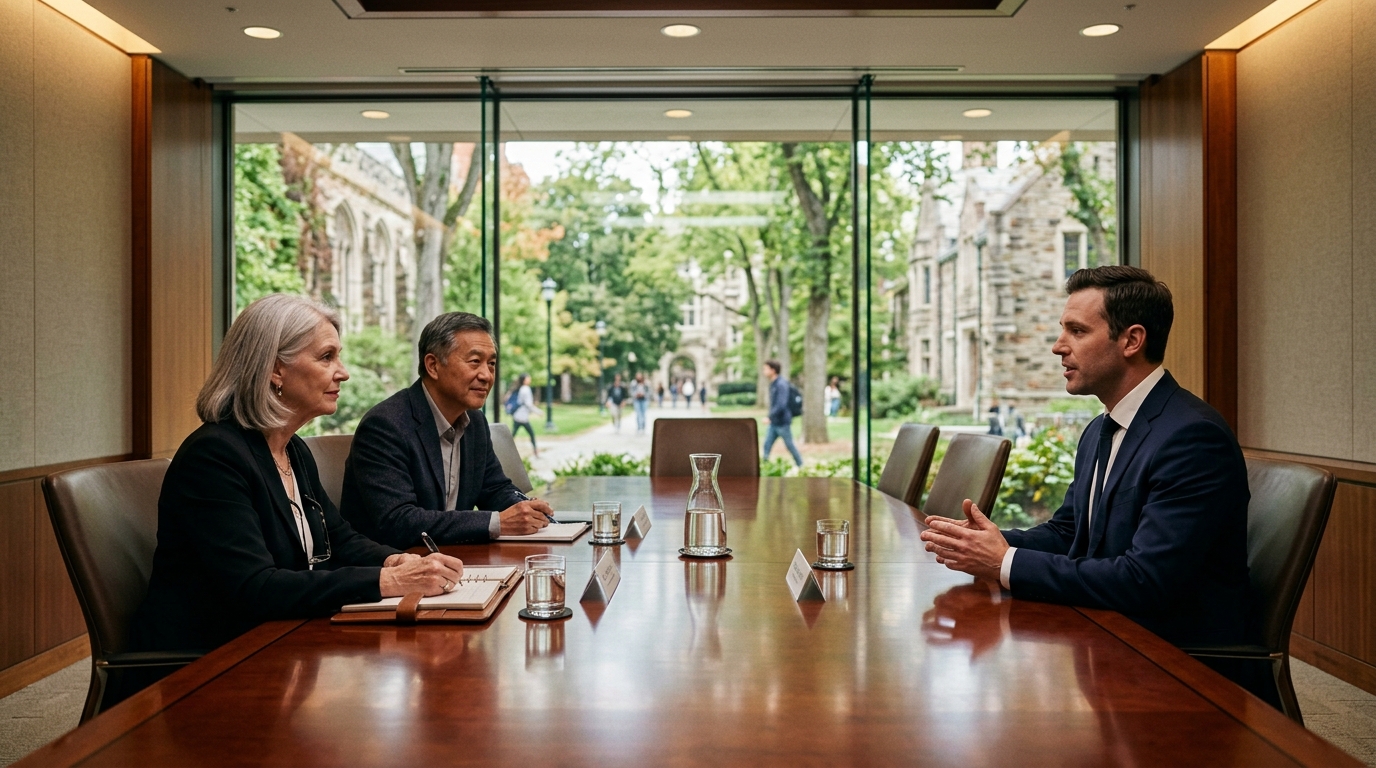
The Personal Interview is the ultimate determinant of your admission. Over 25 to 45 minutes, two or three faculty members will deconstruct your application. The interview revolves around four distinct pillars, and a candidate must demonstrate competency across all four to secure a convert recommendation:
| Interview Pillar | Evaluation Focus | Typical Question Types | Preparation Benchmark |
|---|---|---|---|
| Pillar 1: Academic Fundamentals | Undergraduate depth, theoretical rigor, passion for learning. | 'Explain the difference between Keynesian and Classical economics.' or 'How does a differential amplifier work?' | Revise core textbooks of your 4 favorite college subjects; understand real-world industrial applications. |
| Pillar 2: Professional Work-Ex | Domain expertise, quantifiable business impact, strategic clarity. | 'What is your company's EBITDA margin? How did your project directly influence revenue?' | Deconstruct your employer's balance sheet, client value proposition, and competitor dynamics using the STAR method. |
| Pillar 3: Macro & Geopolitics | Current events, international relations, socio-economic literacy. | 'What are the implications of the US Federal Reserve's rate cycle on emerging market debt?' | Read The Hindu or Mint editorials daily; maintain notes on top 10 national and 5 global developments. |
| Pillar 4: Behavioral & Fitment | Self-awareness, leadership, ethics, motivation for an MBA. | 'Tell me about yourself.', 'Why MBA now?', 'Describe a significant failure and your subsequent recovery.' | Develop authentic, narrative-driven personal stories avoiding clichés or fabricated achievements. |
5. Mastering the 'Big Three' Personal Interview Questions
Almost every IIM personal interview commences with or pivots around three universal behavioral inquiries. Delivering scripted, textbook answers will instantly lose the panel's interest. Here is how master mentors structure them:
**Question 1: 'Tell Me About Yourself / Walk Me Through Your Resume'**
- **The Flawed Approach:** Chronologically reciting your 10th marks, 12th marks, college name, and job title (which the panel is already reading on the sheet in front of them).
- **The Winning Framework (The Identity Arc):** Structure your answer in three seamless movements: (1) Who you are at your core (an analytical thinker, a builder, a problem solver), (2) The defining milestones that forged your perspective (an undergraduate research project, a high-stakes client turnaround), and (3) What drives you toward this interview room today. Keep it under 90 seconds. End with an intriguing intellectual hook that invites the panel to ask their next question on your strongest topic.
**Question 2: 'Why MBA Right Now?'**
- **The Flawed Approach:** 'I want to gain leadership skills and an MBA from IIM will help me earn a higher package in consulting.'
- **The Winning Framework (The Catalyst & Skill Gap):** Articulate the specific ceiling you have encountered in your current trajectory: 'In my current role as a Senior Analyst, I can diagnose technical data anomalies, but I lack the strategic frameworks to evaluate corporate balance sheets, organizational restructuring, and go-to-market trade-offs. To transition from a functional executor to an enterprise leader in supply-chain strategy, I need the rigorous case-method pedagogy and diverse peer learning offered by IIM Bangalore's PGP program.'
**Question 3: 'Where Do You See Yourself in Five Years?'**
- **The Flawed Approach:** 'I want to be a Partner at McKinsey' or 'I see myself as a CEO of a unicorn.'
- **The Winning Framework (Role, Impact & Scope):** Focus on domain mastery and organizational responsibility rather than glamorous job titles: 'In the immediate two to three years post-MBA, I aim to join a top-tier management consultancy focusing on industrial operations and decarbonization. In five years, I envision myself as an Engagement Manager leading cross-functional transformation teams, advising Fortune 500 manufacturing firms on integrating sustainable supply chains while preserving EBITDA margins.'
6. Handling Stress Interviews, Rapid-Fire Technicals & Ethical Dilemmas
At IIM Ahmedabad, IIM Calcutta, and IIM Lucknow, interview panels frequently employ **deliberate stress tactics** to test how an applicant behaves when their authority, knowledge, or composure is under attack. Common stress manifestations include:
- **The Knowledge Trap:** Asking an impossibly obscure academic question (e.g., 'Derive the Navier-Stokes equations for compressible fluid flow'). *The winning response:* Never bluff or fabricate an answer. Look the professor in the eye, smile calmly, and say: 'Sir, I have studied the conceptual implications of fluid flow, but I do not recall the mathematical derivation at this moment. I would prefer not to speculate, but I will review it today.' Panelists respect intellectual honesty over deceit.
- **The Disparagement Challenge:** 'Your college grades are mediocre. Why should we waste a seat on someone who didn't work hard in engineering?' *The winning response:* Take accountability without defensive whining: 'You are completely right, sir; my undergraduate GPA does not reflect my true academic capabilities. During my sophomore year, I overcommitted to organizing the college technical symposium, which impacted my semester grades. However, I learned the critical lesson of prioritization, as demonstrated by my 99.4 percentile on CAT and my consistent top-performer ratings during two years at Deloitte.'
- **The Ethical Dilemma:** 'Your manager asks you to manipulate the revenue recognition date of a multi-million-dollar deal to meet quarterly targets, promising a promotion in return. What will you do?' *The winning response:* Anchor your answer in fiduciary duty and legal integrity: explain that revenue manipulation violates statutory accounting standards (IndAS/IFRS) and corporate governance, jeopardizing the firm's legal standing. Outline a professional escalation mechanism rather than adopting self-righteous aggression.
7. Accelerating Interview Mastery with AI Mock Simulators
The traditional method of interview preparation—practicing in front of a mirror or relying on occasional mock interviews with busy alumni—suffers from severe feedback latency and subjective bias. To bridge this critical gap, MBA Wizards developed the AI CAT Mock Interviewer.
Our AI platform utilizes advanced speech processing and contextual NLP models trained on over 5,000 official IIM interview transcripts. The simulator delivers an authentic faculty interview experience:
- **Dynamic Profile-Specific Questioning:** Input your undergraduate branch, company name, and target IIM, and the AI generates real-time, adaptive technical and behavioral questions.
- **Real-Time Delivery & Cadence Analytics:** Measures your words-per-minute pacing, flags nervous filler words ('um', 'like', 'basically'), and analyzes tone modulation.
- **Content Depth Scoring:** Evaluates whether your answers include concrete empirical evidence, structural frameworks (STAR, PESTEL), and balanced logic.
- **Immediate Actionable Diagnostics:** Delivers an instant forensic scorecard pinpointing knowledge gaps before you face the real admissions board.
8. A Dedicated 60-Day Stage-2 Preparation Timetable
To ensure comprehensive coverage across academics, work experience, WAT essays, and current affairs, follow this intensive 60-day calendar commencing in December:
| Preparation Phase | Target Timeline | Daily Operational Focus | Key Deliverables |
|---|---|---|---|
| Phase 1: Profile & Resume Audit | Day 1 – Day 15 (Post-CAT) | Detailed documentation of work projects, academic textbooks review. | Complete Master Bio, STAR project narratives, and undergraduate subject summaries. |
| Phase 2: Macro Affairs & WAT Drills | Day 16 – Day 30 | Daily editorial analysis (The Hindu/Mint); 1 handwritten timed WAT essay daily. | 15 reviewed WAT essays; comprehensive dossier on top 12 national economic policies. |
| Phase 3: Core PI Behavioral Framing | Day 31 – Day 45 | Scripting and recording answers to top 30 behavioral and ethical questions. | Flawless delivery of 'Tell Me About Yourself', 'Why MBA', and short/long-term goals. |
| Phase 4: Simulated AI & Faculty Mocks | Day 46 – Day 60 | 2 AI video mocks per week + 1 full-length mock with senior IIT/IIM alumni. | Complete elimination of filler words; mastery under simulated stress questioning. |
9. The Top 10 Fatal Interview Mistakes That Trigger Immediate Rejection
Over two decades of analyzing rejection feedback from admissions committees, we have identified the ten most common fatal mistakes committed by candidates in the interview room:
- **Bluffing on Technical Concepts:** Attempting to fake knowledge in front of a professor who literally wrote the standard university textbook on that subject.
- **The 'Money & Status' Answer to Why MBA:** Revealing that your primary motivation is escaping a boring software job for a ₹35-Lakh consulting paycheck.
- **Disparaging Past Employers or Colleges:** Criticizing your previous company, manager, or undergraduate institution reveals poor professional loyalty and low emotional maturity.
- **Monotone Delivery and Lack of Intellectual Curiosity:** Speaking with flat, robotic disinterest rather than demonstrating genuine intellectual vitality.
- **Argumentative Defensive Posture:** Interpreting an interviewer's counter-perspective as a personal attack and stubbornly arguing rather than demonstrating executive flexibility.
- **Ignorance of Employer Business Model:** Being unable to explain how your company generates gross revenue, manages customer acquisition costs, or navigates competitor threats.
- **Sloppy Personal Presentation:** Poor virtual lighting, distracted eye contact, wrinkled attire, or unprofessional physical posture.
- **Giving 10-Minute Monologues:** Failing to pause and check for interviewer engagement, turning an interactive dialogue into an exhausting lecture.
- **Lack of Self-Awareness on Weaknesses:** Answering 'My greatest weakness is that I am a perfectionist who works too hard.' Panelists despise humble-bragging clichés.
- **Leaving the Room Without Asking a Thoughtful Question:** When invited to ask a question at the end, either asking nothing or asking 'How soon will results be declared?'
10. Frequently Asked Questions: WAT, GD & PI
Q: Can average communication skills stop me from converting an IIM call?
IIM panels do not evaluate theatrical fluency, British accents, or fancy vocabulary. They evaluate clarity of thought, logical structure, and authentic conviction. If you speak simple, grammatically correct English at a measured pace and support arguments with concrete facts, you will score exceptionally well.
Q: What should I do if the interview panel asks a question I have zero idea about?
Immediately acknowledge your lack of knowledge with polite confidence: 'Sir, I am not familiar with this specific topic, and I would prefer not to speculate.' Never attempt to guess or waffle; professors test your intellectual boundary and integrity as much as your knowledge.
Q: How long should my answer to 'Tell me about yourself' be?
The ideal answer should last between 60 to 90 seconds (approximately 150 to 200 spoken words). It should provide a cohesive narrative arc—your academic foundation, your defining professional milestones, and your motivation for pursuing an MBA—concluding with an intriguing hook for follow-up discussion.
Q: Are Written Ability Test (WAT) topics usually about politics?
WAT topics span a diverse range of themes: socio-economic policy (e.g., green hydrogen subsidies, digital currency), corporate ethics (e.g., data privacy, gig-economy workers' rights), philosophical themes, and case scenarios. Highly partisan political rants are discouraged; maintain a balanced, multi-stakeholder analytical tone.
Q: How many mock interviews should I take before my actual IIM interview?
We recommend a minimum of 6 to 8 full-length simulated mock interviews: 4 to 5 sessions using our AI CAT Mock Interviewer for rapid diagnostic feedback on pacing and technical depth, followed by 2 to 3 comprehensive panel interviews with experienced IIM alumni.
Q: Is it okay to admit a mistake during a stress interview?
Yes! In fact, that is frequently the entire objective of a stress interview. Panelists want to observe whether you possess the intellectual maturity to acknowledge a flawed premise gracefully, or whether you react with stubborn hostility and irrational defensiveness.
Q: What is the best dress code for IIM personal interviews?
Formal Western business attire is mandatory. For male candidates: a well-fitted dark suit (navy blue or charcoal grey), a crisp white or light blue shirt, a subtle silk tie, and polished black formal shoes. For female candidates: a formal business suit (trouser or skirt) or a sophisticated, formal Indian saree/salwar suit in muted, professional tones.
Q: Can I prepare for IIM interviews while working a full-time corporate job?
Yes, the vast majority of successful converts prepare while working full-time. Dedicate 60 minutes in the early morning to daily editorial reading and news synthesis, and 90 minutes in the evening to technical revisions, behavioral scripting, and taking AI mock interviews.
Accelerate Your Score with MBA Wizards AI Diagnostic Tools
Proprietary adaptive test algorithms, speech cadence analytics, and behavioral simulation trained on 25+ years of IIM and 700+ GMAT mentorship data.
AI CAT Mock Interviewer
Adaptive IIM PI simulation with real-time video evaluation, speech cadence analytics, and faculty question banks.
Launch CAT Interviewer ↗AI GMAT Interviewer
Simulate high-stakes behavioral & leadership interviews for ISB, IIM PGPX, and global M7 business schools with instant scoring.
Try GMAT Interviewer ↗GMAT Adaptive Mock Tests
Authentic item-response theory algorithms, 3-question edit feature, and deep sectional error logs for 705+ targeting.
Take Adaptive Mock ↗1-on-1 Faculty Mentorship
Personalized diagnostic strategy consultation with Surinder Gupta to audit your test baseline and target intake roadmap.
Aiming for 705+ on GMAT or 99th %ile in CAT?
Schedule a personalized 1-on-1 strategy call with Surinder Gupta (IIT Roorkee Alum) and get a diagnostic roadmap tailored to your target intake.