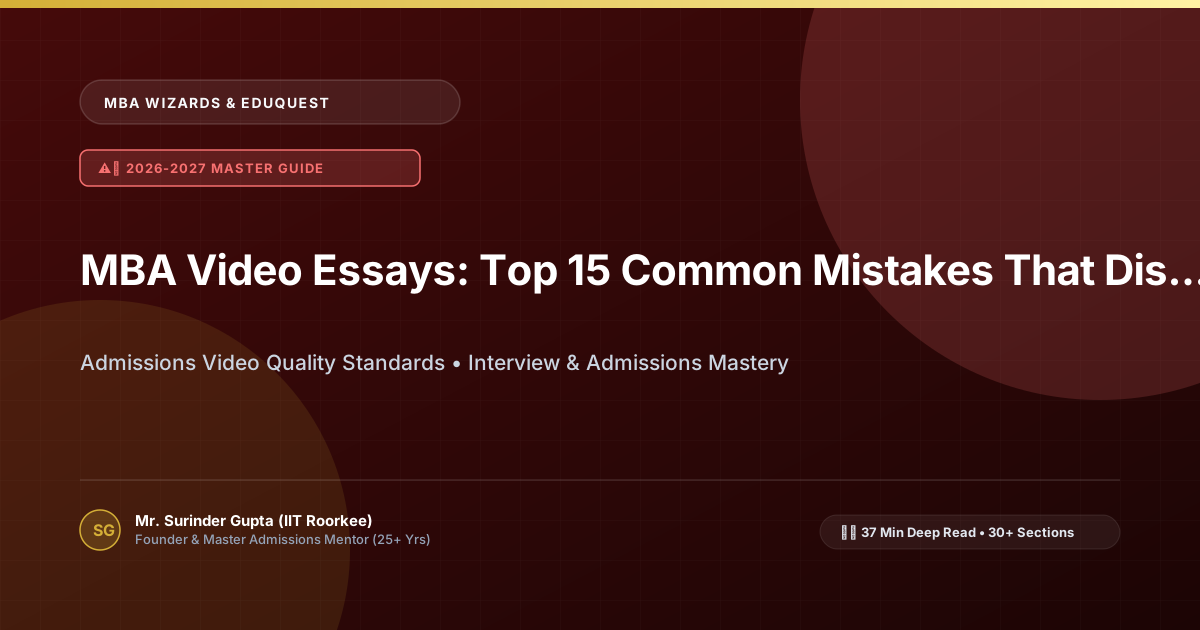
MBA Video Essays: Top 15 Common Mistakes That Disqualify Applicants (And How to Fix Them)
Avoid the critical mistakes that ruin MBA video essays. From robotic script memorization to poor lighting and rambling answers, discover how to polish your video submissions.
Securing an interview invitation from an elite institution such as Admissions Video Quality Standards represents a monumental milestone in your business school journey. It confirms that your academic credentials, test scores (GMAT/GRE), and professional achievements have successfully cleared the stringent admissions threshold. However, the interview is where the admissions committee determines whether your executive presence, emotional intelligence, leadership maturity, and cultural alignment match the caliber of their incoming cohort.
In this comprehensive master guide, we provide an exhaustive, 360-degree analysis of MBA Video Essays: Top 15 Common Mistakes That Disqualify Applicants (And How to Fix Them). Designed by senior IIT Roorkee admissions mentors and former Ivy League/top-tier business school alumni, this blueprint equips you with the strategic frameworks, school-specific evaluation criteria, and practical answer structures needed to convert your interview call into an unconditional offer of admission.
1. The High Cost of Video Essay Errors in Competitive MBA Admissions
Mastering 1. the high cost of video essay errors in competitive mba admissions is fundamental to presenting an authentic, polished, and compelling narrative before the admissions committee and alumni evaluators. In Admissions Video Quality Standards, admissions evaluators look beyond rehearsed talking points to assess how you think under pressure, structure ambiguous information, and communicate strategic outcomes.
When tackling this area, successful candidates employ structured communication frameworks. Rather than delivering rambling historical summaries, elite applicants anchor their responses around quantifiable leadership actions, interpersonal empathy, and deliberate self-reflection. Demonstrating how past inflection points have shaped your executive judgment allows evaluators to envision your active contribution in case discussions and team projects.
2. Mistake #1: The Robotic Memorization Trap (Reciting Scripts Word-for-Word)
Mastering 2. mistake #1: the robotic memorization trap (reciting scripts word-for-word) is fundamental to presenting an authentic, polished, and compelling narrative before the admissions committee and alumni evaluators. In Admissions Video Quality Standards, admissions evaluators look beyond rehearsed talking points to assess how you think under pressure, structure ambiguous information, and communicate strategic outcomes.
When tackling this area, successful candidates employ structured communication frameworks. Rather than delivering rambling historical summaries, elite applicants anchor their responses around quantifiable leadership actions, interpersonal empathy, and deliberate self-reflection. Demonstrating how past inflection points have shaped your executive judgment allows evaluators to envision your active contribution in case discussions and team projects.
3. Mistake #2: The Off-Screen Cheat Sheet & Peeking Eyes Syndrome
Mastering 3. mistake #2: the off-screen cheat sheet & peeking eyes syndrome is fundamental to presenting an authentic, polished, and compelling narrative before the admissions committee and alumni evaluators. In Admissions Video Quality Standards, admissions evaluators look beyond rehearsed talking points to assess how you think under pressure, structure ambiguous information, and communicate strategic outcomes.
When tackling this area, successful candidates employ structured communication frameworks. Rather than delivering rambling historical summaries, elite applicants anchor their responses around quantifiable leadership actions, interpersonal empathy, and deliberate self-reflection. Demonstrating how past inflection points have shaped your executive judgment allows evaluators to envision your active contribution in case discussions and team projects.
4. Mistake #3: Catastrophic Lighting (Backlighting, Silhouettes, and Shadows)
Mastering 4. mistake #3: catastrophic lighting (backlighting, silhouettes, and shadows) is fundamental to presenting an authentic, polished, and compelling narrative before the admissions committee and alumni evaluators. In Admissions Video Quality Standards, admissions evaluators look beyond rehearsed talking points to assess how you think under pressure, structure ambiguous information, and communicate strategic outcomes.
When tackling this area, successful candidates employ structured communication frameworks. Rather than delivering rambling historical summaries, elite applicants anchor their responses around quantifiable leadership actions, interpersonal empathy, and deliberate self-reflection. Demonstrating how past inflection points have shaped your executive judgment allows evaluators to envision your active contribution in case discussions and team projects.
“The difference between a good MBA interview and a great one is intentional reflection. We don't just want to know what you did; we need to know why you made that choice, how you handled opposition, and what you learned when things didn't go as planned.”
— Senior Admissions Committee Member & MBA Wizards Faculty
5. Mistake #4: Horrible Audio Quality, Echoes, and Background Ambient Noise
Mastering 5. mistake #4: horrible audio quality, echoes, and background ambient noise is fundamental to presenting an authentic, polished, and compelling narrative before the admissions committee and alumni evaluators. In Admissions Video Quality Standards, admissions evaluators look beyond rehearsed talking points to assess how you think under pressure, structure ambiguous information, and communicate strategic outcomes.
When tackling this area, successful candidates employ structured communication frameworks. Rather than delivering rambling historical summaries, elite applicants anchor their responses around quantifiable leadership actions, interpersonal empathy, and deliberate self-reflection. Demonstrating how past inflection points have shaped your executive judgment allows evaluators to envision your active contribution in case discussions and team projects.
- Anchor every story with a crisp problem statement, quantified stakes, and key stakeholders involved.
- Enforce the 50% Rule: dedicate at least half of your answer time to the specific actions YOU personally initiated.
- Highlight collaborative navigation: explain how you aligned cross-functional partners and resolved conflicting incentives.
- Conclude with enduring institutional learning and how you apply that insight to your target post-MBA career vision.
6. Mistake #5: Bad Camera Angles (The Unflattering 'Laptop Looking Up' Angle)
Mastering 6. mistake #5: bad camera angles (the unflattering 'laptop looking up' angle) is fundamental to presenting an authentic, polished, and compelling narrative before the admissions committee and alumni evaluators. In Admissions Video Quality Standards, admissions evaluators look beyond rehearsed talking points to assess how you think under pressure, structure ambiguous information, and communicate strategic outcomes.
When tackling this area, successful candidates employ structured communication frameworks. Rather than delivering rambling historical summaries, elite applicants anchor their responses around quantifiable leadership actions, interpersonal empathy, and deliberate self-reflection. Demonstrating how past inflection points have shaped your executive judgment allows evaluators to envision your active contribution in case discussions and team projects.
7. Mistake #6: Getting Cut Off Mid-Sentence by the Strict Platform Timer
Mastering 7. mistake #6: getting cut off mid-sentence by the strict platform timer is fundamental to presenting an authentic, polished, and compelling narrative before the admissions committee and alumni evaluators. In Admissions Video Quality Standards, admissions evaluators look beyond rehearsed talking points to assess how you think under pressure, structure ambiguous information, and communicate strategic outcomes.
When tackling this area, successful candidates employ structured communication frameworks. Rather than delivering rambling historical summaries, elite applicants anchor their responses around quantifiable leadership actions, interpersonal empathy, and deliberate self-reflection. Demonstrating how past inflection points have shaped your executive judgment allows evaluators to envision your active contribution in case discussions and team projects.
8. Mistake #7: Finishing Too Early with 25 Seconds of Awkward Silence
Mastering 8. mistake #7: finishing too early with 25 seconds of awkward silence is fundamental to presenting an authentic, polished, and compelling narrative before the admissions committee and alumni evaluators. In Admissions Video Quality Standards, admissions evaluators look beyond rehearsed talking points to assess how you think under pressure, structure ambiguous information, and communicate strategic outcomes.
When tackling this area, successful candidates employ structured communication frameworks. Rather than delivering rambling historical summaries, elite applicants anchor their responses around quantifiable leadership actions, interpersonal empathy, and deliberate self-reflection. Demonstrating how past inflection points have shaped your executive judgment allows evaluators to envision your active contribution in case discussions and team projects.
9. Mistake #8: Rambling and Failing to Answer the Specific Prompt Asked
Mastering 9. mistake #8: rambling and failing to answer the specific prompt asked is fundamental to presenting an authentic, polished, and compelling narrative before the admissions committee and alumni evaluators. In Admissions Video Quality Standards, admissions evaluators look beyond rehearsed talking points to assess how you think under pressure, structure ambiguous information, and communicate strategic outcomes.
When tackling this area, successful candidates employ structured communication frameworks. Rather than delivering rambling historical summaries, elite applicants anchor their responses around quantifiable leadership actions, interpersonal empathy, and deliberate self-reflection. Demonstrating how past inflection points have shaped your executive judgment allows evaluators to envision your active contribution in case discussions and team projects.
10. Mistake #9: Over-Explaining Context and Spending 80% of Time on the Setup
Mastering 10. mistake #9: over-explaining context and spending 80% of time on the setup is fundamental to presenting an authentic, polished, and compelling narrative before the admissions committee and alumni evaluators. In Admissions Video Quality Standards, admissions evaluators look beyond rehearsed talking points to assess how you think under pressure, structure ambiguous information, and communicate strategic outcomes.
When tackling this area, successful candidates employ structured communication frameworks. Rather than delivering rambling historical summaries, elite applicants anchor their responses around quantifiable leadership actions, interpersonal empathy, and deliberate self-reflection. Demonstrating how past inflection points have shaped your executive judgment allows evaluators to envision your active contribution in case discussions and team projects.
| Evaluation Dimension | Average Candidate Delivery | Elite Candidate Execution | AdCom Scoring Impact |
|---|---|---|---|
| Strategic Clarity | Lists project milestones chronologically | Explains the underlying commercial rationale and trade-offs | Demonstrates executive business judgment |
| Leadership Agency | Speaks predominantly in 'We' generalizations | Pinpoints exact individual contributions ('I decided, I led') | Validates individual leadership footprint |
| Self-Awareness | Presents superficial weaknesses as strengths | Discusses genuine failures and structural corrective lessons | Confirms emotional maturity & coachability |
| Institutional Fit | Recites generic website marketing claims | Connects specific professors, labs, and clubs to post-MBA goals | Proves deep, authentic commitment to the school |
11. Mistake #10: Monotone Delivery and Low Emotional Energy
Mastering 11. mistake #10: monotone delivery and low emotional energy is fundamental to presenting an authentic, polished, and compelling narrative before the admissions committee and alumni evaluators. In Admissions Video Quality Standards, admissions evaluators look beyond rehearsed talking points to assess how you think under pressure, structure ambiguous information, and communicate strategic outcomes.
When tackling this area, successful candidates employ structured communication frameworks. Rather than delivering rambling historical summaries, elite applicants anchor their responses around quantifiable leadership actions, interpersonal empathy, and deliberate self-reflection. Demonstrating how past inflection points have shaped your executive judgment allows evaluators to envision your active contribution in case discussions and team projects.
12. Mistake #11: Using Hyper-Technical Jargon that Confuses the General AdCom
Mastering 12. mistake #11: using hyper-technical jargon that confuses the general adcom is fundamental to presenting an authentic, polished, and compelling narrative before the admissions committee and alumni evaluators. In Admissions Video Quality Standards, admissions evaluators look beyond rehearsed talking points to assess how you think under pressure, structure ambiguous information, and communicate strategic outcomes.
When tackling this area, successful candidates employ structured communication frameworks. Rather than delivering rambling historical summaries, elite applicants anchor their responses around quantifiable leadership actions, interpersonal empathy, and deliberate self-reflection. Demonstrating how past inflection points have shaped your executive judgment allows evaluators to envision your active contribution in case discussions and team projects.
13. Mistake #12: Fake Vulnerability and Whitewashed Failure Stories
Mastering 13. mistake #12: fake vulnerability and whitewashed failure stories is fundamental to presenting an authentic, polished, and compelling narrative before the admissions committee and alumni evaluators. In Admissions Video Quality Standards, admissions evaluators look beyond rehearsed talking points to assess how you think under pressure, structure ambiguous information, and communicate strategic outcomes.
When tackling this area, successful candidates employ structured communication frameworks. Rather than delivering rambling historical summaries, elite applicants anchor their responses around quantifiable leadership actions, interpersonal empathy, and deliberate self-reflection. Demonstrating how past inflection points have shaped your executive judgment allows evaluators to envision your active contribution in case discussions and team projects.
14. Mistake #13: Flattering the Business School with Generic Public Buzzwords
Mastering 14. mistake #13: flattering the business school with generic public buzzwords is fundamental to presenting an authentic, polished, and compelling narrative before the admissions committee and alumni evaluators. In Admissions Video Quality Standards, admissions evaluators look beyond rehearsed talking points to assess how you think under pressure, structure ambiguous information, and communicate strategic outcomes.
When tackling this area, successful candidates employ structured communication frameworks. Rather than delivering rambling historical summaries, elite applicants anchor their responses around quantifiable leadership actions, interpersonal empathy, and deliberate self-reflection. Demonstrating how past inflection points have shaped your executive judgment allows evaluators to envision your active contribution in case discussions and team projects.
“The difference between a good MBA interview and a great one is intentional reflection. We don't just want to know what you did; we need to know why you made that choice, how you handled opposition, and what you learned when things didn't go as planned.”
— Senior Admissions Committee Member & MBA Wizards Faculty
15. Mistake #14: Nervous Body Language (Swiveling Chairs, Hand Fidgeting, Gaze Darting)
Mastering 15. mistake #14: nervous body language (swiveling chairs, hand fidgeting, gaze darting) is fundamental to presenting an authentic, polished, and compelling narrative before the admissions committee and alumni evaluators. In Admissions Video Quality Standards, admissions evaluators look beyond rehearsed talking points to assess how you think under pressure, structure ambiguous information, and communicate strategic outcomes.
When tackling this area, successful candidates employ structured communication frameworks. Rather than delivering rambling historical summaries, elite applicants anchor their responses around quantifiable leadership actions, interpersonal empathy, and deliberate self-reflection. Demonstrating how past inflection points have shaped your executive judgment allows evaluators to envision your active contribution in case discussions and team projects.
16. Mistake #15: Procrastination and Taking the Assessment Under Severe Exhaustion
Mastering 16. mistake #15: procrastination and taking the assessment under severe exhaustion is fundamental to presenting an authentic, polished, and compelling narrative before the admissions committee and alumni evaluators. In Admissions Video Quality Standards, admissions evaluators look beyond rehearsed talking points to assess how you think under pressure, structure ambiguous information, and communicate strategic outcomes.
When tackling this area, successful candidates employ structured communication frameworks. Rather than delivering rambling historical summaries, elite applicants anchor their responses around quantifiable leadership actions, interpersonal empathy, and deliberate self-reflection. Demonstrating how past inflection points have shaped your executive judgment allows evaluators to envision your active contribution in case discussions and team projects.
- Anchor every story with a crisp problem statement, quantified stakes, and key stakeholders involved.
- Enforce the 50% Rule: dedicate at least half of your answer time to the specific actions YOU personally initiated.
- Highlight collaborative navigation: explain how you aligned cross-functional partners and resolved conflicting incentives.
- Conclude with enduring institutional learning and how you apply that insight to your target post-MBA career vision.
17. Deep-Dive Diagnostic: How AdCom Scores Technical and Narrative Flaws
Mastering 17. deep-dive diagnostic: how adcom scores technical and narrative flaws is fundamental to presenting an authentic, polished, and compelling narrative before the admissions committee and alumni evaluators. In Admissions Video Quality Standards, admissions evaluators look beyond rehearsed talking points to assess how you think under pressure, structure ambiguous information, and communicate strategic outcomes.
When tackling this area, successful candidates employ structured communication frameworks. Rather than delivering rambling historical summaries, elite applicants anchor their responses around quantifiable leadership actions, interpersonal empathy, and deliberate self-reflection. Demonstrating how past inflection points have shaped your executive judgment allows evaluators to envision your active contribution in case discussions and team projects.
18. The Corrective Blueprint for Script Memorizers: Transitioning to Bullet Thinking
Mastering 18. the corrective blueprint for script memorizers: transitioning to bullet thinking is fundamental to presenting an authentic, polished, and compelling narrative before the admissions committee and alumni evaluators. In Admissions Video Quality Standards, admissions evaluators look beyond rehearsed talking points to assess how you think under pressure, structure ambiguous information, and communicate strategic outcomes.
When tackling this area, successful candidates employ structured communication frameworks. Rather than delivering rambling historical summaries, elite applicants anchor their responses around quantifiable leadership actions, interpersonal empathy, and deliberate self-reflection. Demonstrating how past inflection points have shaped your executive judgment allows evaluators to envision your active contribution in case discussions and team projects.
19. The Corrective Blueprint for Time Management: The 10-35-15 Second Rule
Mastering 19. the corrective blueprint for time management: the 10-35-15 second rule is fundamental to presenting an authentic, polished, and compelling narrative before the admissions committee and alumni evaluators. In Admissions Video Quality Standards, admissions evaluators look beyond rehearsed talking points to assess how you think under pressure, structure ambiguous information, and communicate strategic outcomes.
When tackling this area, successful candidates employ structured communication frameworks. Rather than delivering rambling historical summaries, elite applicants anchor their responses around quantifiable leadership actions, interpersonal empathy, and deliberate self-reflection. Demonstrating how past inflection points have shaped your executive judgment allows evaluators to envision your active contribution in case discussions and team projects.
20. The Corrective Blueprint for Audio-Visual Setup: Budget-Friendly Pro Equipment
Mastering 20. the corrective blueprint for audio-visual setup: budget-friendly pro equipment is fundamental to presenting an authentic, polished, and compelling narrative before the admissions committee and alumni evaluators. In Admissions Video Quality Standards, admissions evaluators look beyond rehearsed talking points to assess how you think under pressure, structure ambiguous information, and communicate strategic outcomes.
When tackling this area, successful candidates employ structured communication frameworks. Rather than delivering rambling historical summaries, elite applicants anchor their responses around quantifiable leadership actions, interpersonal empathy, and deliberate self-reflection. Demonstrating how past inflection points have shaped your executive judgment allows evaluators to envision your active contribution in case discussions and team projects.
“The difference between a good MBA interview and a great one is intentional reflection. We don't just want to know what you did; we need to know why you made that choice, how you handled opposition, and what you learned when things didn't go as planned.”
— Senior Admissions Committee Member & MBA Wizards Faculty
21. Corrective Sample Story: From Over-Detailed Jargon to High-Impact Leadership
Mastering 21. corrective sample story: from over-detailed jargon to high-impact leadership is fundamental to presenting an authentic, polished, and compelling narrative before the admissions committee and alumni evaluators. In Admissions Video Quality Standards, admissions evaluators look beyond rehearsed talking points to assess how you think under pressure, structure ambiguous information, and communicate strategic outcomes.
When tackling this area, successful candidates employ structured communication frameworks. Rather than delivering rambling historical summaries, elite applicants anchor their responses around quantifiable leadership actions, interpersonal empathy, and deliberate self-reflection. Demonstrating how past inflection points have shaped your executive judgment allows evaluators to envision your active contribution in case discussions and team projects.
| Evaluation Dimension | Average Candidate Delivery | Elite Candidate Execution | AdCom Scoring Impact |
|---|---|---|---|
| Strategic Clarity | Lists project milestones chronologically | Explains the underlying commercial rationale and trade-offs | Demonstrates executive business judgment |
| Leadership Agency | Speaks predominantly in 'We' generalizations | Pinpoints exact individual contributions ('I decided, I led') | Validates individual leadership footprint |
| Self-Awareness | Presents superficial weaknesses as strengths | Discusses genuine failures and structural corrective lessons | Confirms emotional maturity & coachability |
| Institutional Fit | Recites generic website marketing claims | Connects specific professors, labs, and clubs to post-MBA goals | Proves deep, authentic commitment to the school |
22. Corrective Sample Story: From Fake Failure to Genuine Resilient Growth
Mastering 22. corrective sample story: from fake failure to genuine resilient growth is fundamental to presenting an authentic, polished, and compelling narrative before the admissions committee and alumni evaluators. In Admissions Video Quality Standards, admissions evaluators look beyond rehearsed talking points to assess how you think under pressure, structure ambiguous information, and communicate strategic outcomes.
When tackling this area, successful candidates employ structured communication frameworks. Rather than delivering rambling historical summaries, elite applicants anchor their responses around quantifiable leadership actions, interpersonal empathy, and deliberate self-reflection. Demonstrating how past inflection points have shaped your executive judgment allows evaluators to envision your active contribution in case discussions and team projects.
23. Corrective Sample Story: From Generic School Flattery to Authentic Program Fit
Mastering 23. corrective sample story: from generic school flattery to authentic program fit is fundamental to presenting an authentic, polished, and compelling narrative before the admissions committee and alumni evaluators. In Admissions Video Quality Standards, admissions evaluators look beyond rehearsed talking points to assess how you think under pressure, structure ambiguous information, and communicate strategic outcomes.
When tackling this area, successful candidates employ structured communication frameworks. Rather than delivering rambling historical summaries, elite applicants anchor their responses around quantifiable leadership actions, interpersonal empathy, and deliberate self-reflection. Demonstrating how past inflection points have shaped your executive judgment allows evaluators to envision your active contribution in case discussions and team projects.
24. Creating a Fail-Safe Recording Environment: Room Preparation Protocol
Mastering 24. creating a fail-safe recording environment: room preparation protocol is fundamental to presenting an authentic, polished, and compelling narrative before the admissions committee and alumni evaluators. In Admissions Video Quality Standards, admissions evaluators look beyond rehearsed talking points to assess how you think under pressure, structure ambiguous information, and communicate strategic outcomes.
When tackling this area, successful candidates employ structured communication frameworks. Rather than delivering rambling historical summaries, elite applicants anchor their responses around quantifiable leadership actions, interpersonal empathy, and deliberate self-reflection. Demonstrating how past inflection points have shaped your executive judgment allows evaluators to envision your active contribution in case discussions and team projects.
- Anchor every story with a crisp problem statement, quantified stakes, and key stakeholders involved.
- Enforce the 50% Rule: dedicate at least half of your answer time to the specific actions YOU personally initiated.
- Highlight collaborative navigation: explain how you aligned cross-functional partners and resolved conflicting incentives.
- Conclude with enduring institutional learning and how you apply that insight to your target post-MBA career vision.
25. The 5-Minute Emergency Warm-Up Routine for Voice, Face, and Mental Agility
Mastering 25. the 5-minute emergency warm-up routine for voice, face, and mental agility is fundamental to presenting an authentic, polished, and compelling narrative before the admissions committee and alumni evaluators. In Admissions Video Quality Standards, admissions evaluators look beyond rehearsed talking points to assess how you think under pressure, structure ambiguous information, and communicate strategic outcomes.
When tackling this area, successful candidates employ structured communication frameworks. Rather than delivering rambling historical summaries, elite applicants anchor their responses around quantifiable leadership actions, interpersonal empathy, and deliberate self-reflection. Demonstrating how past inflection points have shaped your executive judgment allows evaluators to envision your active contribution in case discussions and team projects.
26. Pre-Submission Quality Control Checklist (20 Points)
Mastering 26. pre-submission quality control checklist (20 points) is fundamental to presenting an authentic, polished, and compelling narrative before the admissions committee and alumni evaluators. In Admissions Video Quality Standards, admissions evaluators look beyond rehearsed talking points to assess how you think under pressure, structure ambiguous information, and communicate strategic outcomes.
When tackling this area, successful candidates employ structured communication frameworks. Rather than delivering rambling historical summaries, elite applicants anchor their responses around quantifiable leadership actions, interpersonal empathy, and deliberate self-reflection. Demonstrating how past inflection points have shaped your executive judgment allows evaluators to envision your active contribution in case discussions and team projects.
27. Real AdCom Case Studies: Applicants Rejected vs. Admitted on Video Execution
Mastering 27. real adcom case studies: applicants rejected vs. admitted on video execution is fundamental to presenting an authentic, polished, and compelling narrative before the admissions committee and alumni evaluators. In Admissions Video Quality Standards, admissions evaluators look beyond rehearsed talking points to assess how you think under pressure, structure ambiguous information, and communicate strategic outcomes.
When tackling this area, successful candidates employ structured communication frameworks. Rather than delivering rambling historical summaries, elite applicants anchor their responses around quantifiable leadership actions, interpersonal empathy, and deliberate self-reflection. Demonstrating how past inflection points have shaped your executive judgment allows evaluators to envision your active contribution in case discussions and team projects.
28. 7-Day Video Polish Calendar: Eliminating Flaws Before Live Submissions
Mastering 28. 7-day video polish calendar: eliminating flaws before live submissions is fundamental to presenting an authentic, polished, and compelling narrative before the admissions committee and alumni evaluators. In Admissions Video Quality Standards, admissions evaluators look beyond rehearsed talking points to assess how you think under pressure, structure ambiguous information, and communicate strategic outcomes.
When tackling this area, successful candidates employ structured communication frameworks. Rather than delivering rambling historical summaries, elite applicants anchor their responses around quantifiable leadership actions, interpersonal empathy, and deliberate self-reflection. Demonstrating how past inflection points have shaped your executive judgment allows evaluators to envision your active contribution in case discussions and team projects.
29. Frequently Asked Questions (FAQs) About Video Essay Mistakes
Mastering 29. frequently asked questions (faqs) about video essay mistakes is fundamental to presenting an authentic, polished, and compelling narrative before the admissions committee and alumni evaluators. In Admissions Video Quality Standards, admissions evaluators look beyond rehearsed talking points to assess how you think under pressure, structure ambiguous information, and communicate strategic outcomes.
When tackling this area, successful candidates employ structured communication frameworks. Rather than delivering rambling historical summaries, elite applicants anchor their responses around quantifiable leadership actions, interpersonal empathy, and deliberate self-reflection. Demonstrating how past inflection points have shaped your executive judgment allows evaluators to envision your active contribution in case discussions and team projects.
Q: How long should my answers typically be during the Admissions Video Quality Standards interview?
Most behavioral and narrative answers should be delivered between 90 and 120 seconds (1.5 to 2 minutes). For asynchronous video prompts with strict timers (e.g., Kira Talent), target 50-55 seconds for a 60-second limit to ensure you deliver a strong conclusion without getting cut off.
Q: What should I do if I get asked a spontaneous question I haven't prepared for?
Pause calmly for 3 to 5 seconds to structure your thoughts. Acknowledge the question with composure ('That's a thoughtful question; let me structure my response around two key factors...'). It is far better to take a deliberate breath and deliver a structured answer than to start rambling immediately.
Q: How does Admissions Video Quality Standards evaluate the interview compared to the rest of the application?
The interview is a decisive gatekeeper. While your test scores (GMAT/GRE) and GPA earn you the interview invitation, the interview report frequently carries 40% to 50% of the final admissions committee deliberation weight. A stellar interview can elevate a borderline profile, while a flat or arrogant interview will derail a 99th percentile candidate.
Q: Should I send a thank-you email after the interview?
Yes, always send a concise, courteous thank-you note within 24 hours of completing your live interview. Mention 1 or 2 specific conversational insights you discussed to reaffirm your enthusiasm and professional respect.
Q: How can MBA Wizards help me prepare for this specific interview format?
MBA Wizards provides 1-on-1 mock interviews led by IIT Roorkee faculty and top business school alumni, simulated video platforms with AI-driven analytics, and personalized storytelling audits to calibrate your executive presence and convert your shortlists.
30. Secure Your Video Success: Get Personalized Video Audits with MBA Wizards
Mastering 30. secure your video success: get personalized video audits with mba wizards is fundamental to presenting an authentic, polished, and compelling narrative before the admissions committee and alumni evaluators. In Admissions Video Quality Standards, admissions evaluators look beyond rehearsed talking points to assess how you think under pressure, structure ambiguous information, and communicate strategic outcomes.
When tackling this area, successful candidates employ structured communication frameworks. Rather than delivering rambling historical summaries, elite applicants anchor their responses around quantifiable leadership actions, interpersonal empathy, and deliberate self-reflection. Demonstrating how past inflection points have shaped your executive judgment allows evaluators to envision your active contribution in case discussions and team projects.
Aiming for 705+ on GMAT or 99th %ile in CAT?
Schedule a personalized 1-on-1 strategy call with Surinder Gupta (IIT Roorkee Alum) and get a diagnostic roadmap tailored to your target intake.